Table of contents
Five years after the travel shock of 2020, ski resorts are no longer treating rentals as a dusty side service, they are rebuilding it as a core part of the guest journey, from digital booking to doorstep delivery. The pressure is simple and measurable: people ski fewer days on average than in the past, they demand speed, cleanliness, and flexibility, and they compare the experience to e-commerce. In response, destinations across the Alps and North America are reshaping how gear is chosen, fitted, sanitized, and returned, while operators chase higher satisfaction scores and tighter margins.
Rental lines were the first thing to go
Who wants to start a ski day in a queue? After 2020, the long, slow rental line became a symbol resorts could not afford, and operators began targeting the biggest pain point with the most obvious lever: time. Pre-booking moved from “nice-to-have” to default, with guests selecting dates, skill level, and equipment category online, paying upfront, and arriving to a pre-assembled package, which cuts the counter interaction to identity checks and final adjustments. In markets where adoption is mature, rental businesses report that digital reservations now represent the majority of peak-week volume, and the operational logic is clear: fewer bottlenecks, more predictable staffing, and higher attachment rates for helmets, insurance, and premium upgrades.
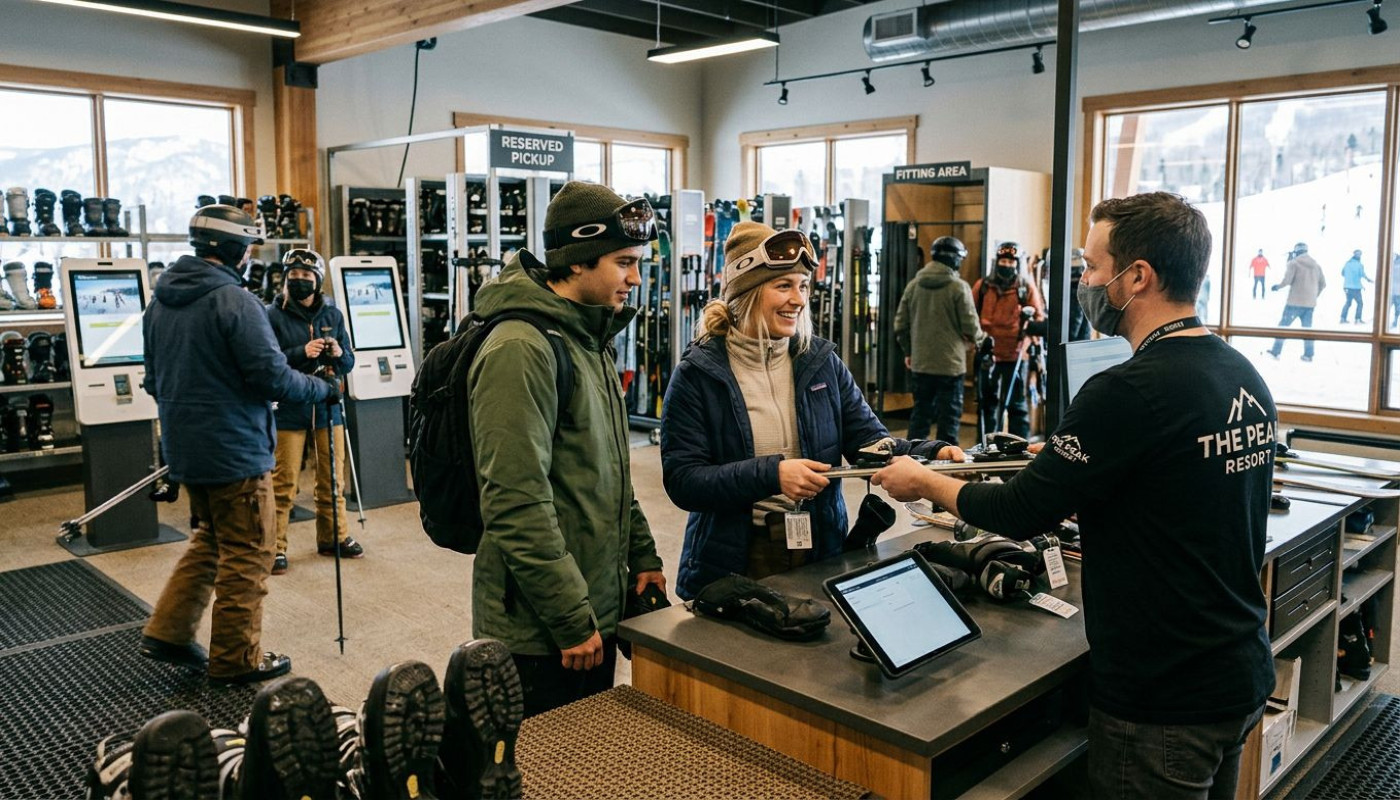
The efficiency push also changed store design. Many newer or renovated shops look less like warehouses and more like airport-style processing: dedicated boot-fitting zones, separated flows for pickup and return, and service benches that keep technicians visible, fast, and accountable. Resorts learned to treat rentals as throughput engineering, measuring “time-to-slope” the way airlines track boarding, and the improvements compound. Faster pickup reduces morning congestion, which reduces complaints, which improves online reviews, and reviews matter because a large share of guests choose rentals based on search results and ratings, not on loyalty to a particular shop.
There is a second force behind the disappearance of lines, and it is financial. A single peak Saturday can represent a disproportionate share of seasonal rental revenue, yet that day is also when operations are most fragile, because one staffing gap or one system failure cascades immediately into delays. By shifting transactions earlier, rentals smooth cash flow and reduce the number of in-store decisions, and guests who commit before arrival are less likely to “shop around” at the last minute. In other words, the post-2020 rental model is not just more convenient, it is also more defensible as a business.
Boot fitting became the real differentiator
Comfort is the new luxury. Skis and boards attract attention, but what determines whether a guest comes back is often the boots, and the industry has become far more candid about that since 2020. With many travelers skiing shorter trips, tolerance for pain dropped, and rental operators started investing in fitting expertise, better boot inventories, and technology that shortens the trial-and-error loop. Foot scanners and pressure-mapping tools, once seen mainly in premium retail, are increasingly used to recommend shell size, volume, and insole options, while technicians are trained to spot common issues such as heel lift, numb toes, and pressure points before they ruin a day.
The data behind this shift is straightforward: discomfort drives early returns, swaps, and refunds, and every swap costs time, labor, and goodwill. A more accurate first fit improves utilization because fewer boots sit idle waiting to be exchanged, and it also supports upselling, because guests are more willing to pay for “performance” or “premium” packages when the value is tangible. In high-end destinations, the competitive battle now often happens at the fitting bench rather than on the ski wall, and the operators winning the battle tend to be those with the deepest sizing range, the cleanest process, and the most consistent technicians.
Sanitation and hygiene, once a background expectation, became a visible part of the pitch. Many shops now communicate their cleaning protocols explicitly, rotating liners, using drying systems that reduce odor and moisture, and sealing or tagging prepared boots so customers feel confidence when they arrive. The psychological effect matters because rentals are intimate equipment, and the trust equation changed after 2020. Operators that treat hygiene as part of service design, not as a backroom task, have found it easier to maintain pricing power even as consumers watch budgets closely.
Delivery and doorstep swaps changed expectations
The shop no longer has to be the shop. One of the most striking changes since 2020 is the spread of delivery-based rentals, especially in destinations where accommodation clusters make logistics practical. Guests book online, a technician brings equipment to the chalet or hotel, fitting happens in a living room rather than under fluorescent lights, and if something feels off, a swap can be scheduled without sacrificing half a day. This model is not universal, and it does not always make sense for every resort layout, yet where it works it reshapes the competitive field, because the “best” rental experience becomes the one that removes friction entirely.
Verbier is a good example of a place where convenience has real value, because the resort attracts short-stay travelers and premium clientele who want skiing to feel seamless. Services specializing in ski rental verbier have leaned into booking simplicity, on-site fitting, and fast exchanges, effectively treating rentals as part of hospitality rather than retail. For guests, the appeal is immediate: fewer errands, less carrying gear through town, and more time on snow, and for operators the payoff is often higher conversion because the experience is easier to say yes to.
Delivery also changes inventory strategy. When technicians travel with equipment, businesses need tighter forecasting, smarter routing, and a buffer stock for swaps, and that pushes the sector toward more structured data use. The best operators track demand by week, accommodation zone, and customer profile, then pre-position popular sizes and categories. It is logistics, but it is also storytelling: the promise is “we come to you,” and the execution must be precise because a missed delivery window is more damaging than a slow in-store pickup. As a result, many rental businesses now behave like micro last-mile networks during peak season, complete with time slots, SMS updates, and service recovery playbooks.
Dynamic pricing and insurance rewrote the deal
The sticker price is no longer the whole price. Rental economics have moved closer to airlines and hotels, with more dynamic pricing, clearer segmentation, and a greater focus on add-ons. Book early and rates can be lower; arrive last minute during a holiday week and the same category costs more. For consumers, this can feel unfamiliar in a sector that once relied on simple boards behind a counter, yet it reflects the same reality seen across tourism: demand is spiky, staffing is expensive, and inventory is finite. For operators, dynamic pricing is a way to protect peak weeks while filling quieter periods, and it aligns incentives by rewarding planning, which also makes operations smoother.
Insurance and damage waivers, once treated as an awkward question at checkout, have become a central component of the rental proposition. The reason is not only risk, it is anxiety. Modern equipment is costly, and guests do not want a surprise bill for a scratched base or a snapped pole, especially when they are traveling. Clear waiver options, transparent terms, and quick digital signing reduce friction, and they can significantly lift revenue per customer. The trade-off is that the industry must communicate responsibly, because aggressive upselling erodes trust, and trust is now one of the most valuable currencies in rentals.
Another pricing shift is the premiumization of categories. Instead of “adult ski set,” many shops now offer tiers tied to terrain or performance, such as all-mountain, carving-focused, freeride, or lightweight touring options, and that mirrors how skiers talk about their days. The segmentation helps guests self-select, and it gives staff a more consultative role, which can improve satisfaction if done well. The resorts that execute best tend to publish clear comparisons, maintain equipment in visibly good condition, and make swapping between categories easy, because flexibility is part of the value proposition.
Before you go: book smart, spend less
Reserve early, especially for peak weeks, and confirm what is included: helmet, poles, and damage cover. Set a clear budget per day, then compare delivery versus pickup based on your schedule, and ask about multi-day discounts. If you travel with kids, check for family packages and local offers, and look up any regional promotions your accommodation may unlock.
On the same subject


